
Collect new hire feedback with employee onboarding surveys to boost retention and engagement.
Leverage real-time feedback and trend analysis from employee onboarding surveys to ensure new employees are adjusting.
Understand which parts of the onboarding process need improvement to drive positive experiences and intention to stay.
Provide opportunities for open communication between managers and new hires from the start.
Templated onboarding and new hire surveys ensure employees are getting what they need from the start.
Make sure you are asking the right questions with our library of validated, customizable or ready-to-launch onboarding templates.
Deploy surveys at the right time and in the right way with automated, hands-off distribution based on custom criteria.
Identify opportunity areas within the onboarding process with AI-powered comment analytics and automated real-time reports that drive active listening.

“The survey platform was easy to implement, integrate and is easy to use for the administrators and participants, it has many features. We first got it to survey engagement and now we use it frequently for multiple different surveys. We had a rep. from day one and anytime I have a question that same rep. responds in a very timely manner.”

“The survey platform was easy to implement, integrate and is easy to use for the administrators and participants, it has many features. We first got it to survey engagement and now we use it frequently for multiple different surveys. We had a rep. from day one and anytime I have a question that same rep. responds in a very timely manner.”

“People Element gets amazing response rates. They ask the right questions to give me insightful data. I can rely on their exit interview data to be unbiased, accurate, and thorough. I like how I can compare my organization to others in my industry and even globally on every question of the survey."
FEATURED RESOURCE
Employee onboarding is the process of integrating new hires into an organization by giving them the knowledge, tools, and support to succeed in their role. Effective onboarding builds confidence, accelerates productivity, and helps employees feel connected to the company from day one.
Strong onboarding programs can improve new hire retention, making it a critical step for long-term employee engagement and building a strong workforce.
Onboarding is important because it sets the tone for a new hire’s experience, ensuring they feel welcomed, prepared, and aligned with company goals. A strong onboarding process improves retention, accelerates productivity, and reduces early turnover.
Research shows organizations with effective onboarding see up to 82% higher new-hire retention, underscoring its role in long-term employee engagement.
To get feedback on your onboarding process, ask new hires about their early experiences through surveys, check-ins, or focus groups. Collecting feedback within the first 30–90 days helps identify gaps in training, communication, and support.
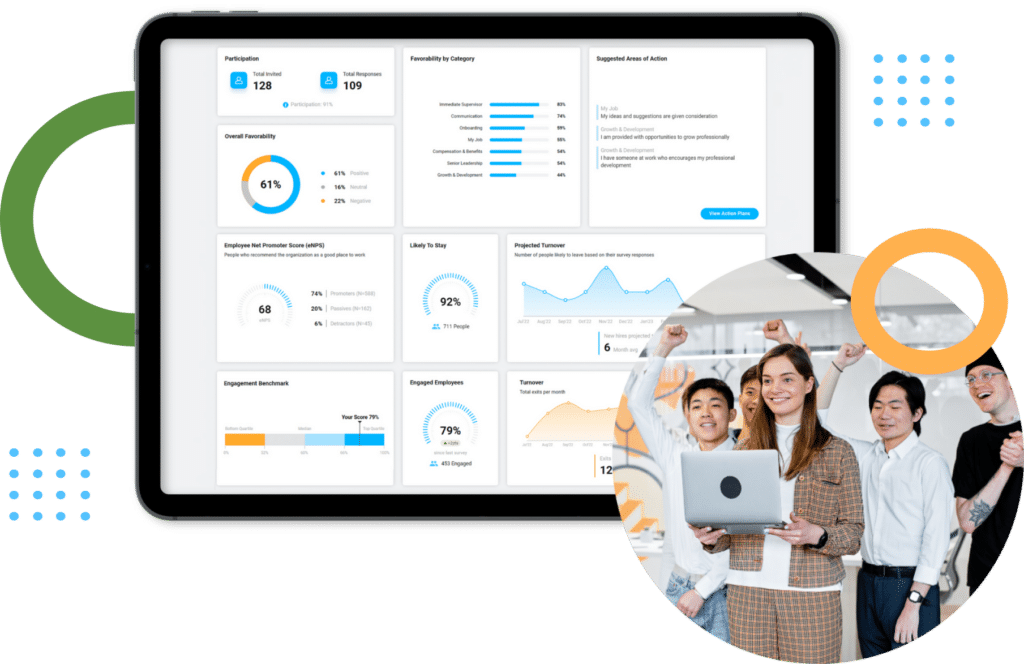
Onboarding surveys make this easy by highlighting trends across employees, so HR leaders can strengthen processes that improve engagement and retention. People Element’s platform streamlines this feedback loop with clear dashboards and action planning.
To improve onboarding with feedback, gather input from new hires through structured surveys and analyze responses for recurring themes. Acting on this feedback ensures the onboarding experience is relevant, supportive, and aligned with employee needs.
HR analytics dashboards make it easy to spot trends across survey data, showing how onboarding influences engagement and retention. With tools like People Element, leaders can quickly turn insights into targeted improvements.
Onboarding impacts retention by shaping how supported and connected employees feel in their first weeks. A strong program builds confidence, fosters loyalty, and reduces the risk of early turnover. In fact, effective onboarding can improve new-hire retention by more than 80%.
When combined with feedback tools like onboarding surveys, HR leaders can track how onboarding influences long-term engagement and adjust strategies to keep employees longer.
Onboarding improves employee performance by giving new hires the training, clarity, and resources they need to succeed early in their roles. A well-structured onboarding program reduces confusion, accelerates learning, and helps employees feel confident in their responsibilities.
Organizations with strong onboarding report faster time-to-productivity and higher engagement, which directly translates into better performance across teams.
Onboarding surveys are structured questionnaires given to new hires during their first weeks to capture feedback on training, support, and overall experience. They help HR leaders identify gaps in the process and act quickly to improve.
With HR analytics dashboards, onboarding survey results can be visualized as trends, showing how early employee experiences connect to long-term engagement and retention. People Element makes this process simple and actionable.
To improve new hire onboarding, provide clear expectations, structured training, and steady support during the first 90 days. Strong onboarding also emphasizes building relationships with managers and peers, not just completing paperwork.
Gathering feedback through surveys or check-ins ensures gaps are identified early, so the onboarding experience can evolve to better support engagement and retention.
Onboarding is important in the HRM process because it connects recruitment to long-term retention, ensuring new employees feel prepared and supported. It helps HR build alignment between individual goals and organizational culture, reducing early turnover and improving job satisfaction.
Strong onboarding also accelerates time-to-productivity — studies show well-supported new hires reach full performance levels up to 70% faster than those without structured onboarding.
Questions asked during onboarding should focus on how new hires are adjusting, their experience with the process, and what could make it smoother.
You might ask how supported they feel, whether training materials are clear, and if they understand their role expectations. These conversations help identify early gaps and build engagement from the start.
It’s best to check in around week two and week five, when employees have enough context to share meaningful feedback about their onboarding experience.
Request a platform demo to get a quote and see how new hire onboarding surveys can set your workforce up for success.