It Wasn't About the $1,200: What a Former Employee's Story Says About Trust
A former employee recently gave their old employer an award. It was tongue in cheek, named after Clark Griswold, the character in Christmas Vacation who counts on a holiday bonus to build a pool and gets a Jelly of the Month Club subscription instead.
Their version of the bonus was an annual stock ownership packet. They had left on good terms and were vested in a small balance, about $1,200 over time, and they looked forward to the yearly update. This year the statement showed their shares had been reallocated. The account value read zero. They wrote about it on LinkedIn.
They were careful in how they told it. They said they don’t know the plan terms or the reason for the change, and they weren’t assuming anyone’s motives. They had enjoyed the work, learned a lot, and had even considered going back. The money, they said, wasn’t really the point. The small account was a link to a place they had been proud to help build.
That’s one post, and one side of a story. It doesn’t tell us how often changes like this go unexplained, or what happened behind the scenes in this case. It does show something worth a closer look: how quickly good feeling can turn when a person has no one to ask.
What changed for someone who left on good terms?
Before the packet, this person was a quiet advocate. They looked forward to the annual update, spoke warmly about their old team, and would have considered a return. After it, they were handing out a public award.
Nothing in the story involves a difficult manager, a layoff, or a low salary. What shifted was trust, and it shifted over a silence. It’s a small cautionary tale about how a lack of communication can break trust, even with someone who was inclined to speak well of you. A current employee can walk down the hall and ask what happened. A former employee usually can’t. Without an answer, the story gets told somewhere else, and anyone considering that employer can read it.
So what can this story tell us about engagement, and what shapes it? One account can’t settle it, but it suggests two things worth testing: that trust and communication shape how people feel about an employer, and that those feelings don’t end on someone’s last day. The author said the money wasn’t the point, so the first thing to check is how much money matters at all, and what the research says matters alongside it.
What role does money play in engagement?
It is important but not always the main reason. Low pay is a common reason people quit, so is feeling disrespected, and one large analysis of turnover found that culture predicted who left far better than pay did.
Start with pay. According to Pew Research Center (Parker and Horowitz, March 2022), 63% of U.S. workers who quit a job in 2021 named low pay as a reason. The same survey found that 57% named feeling disrespected at work.
A different kind of study points the other way. When MIT Sloan Management Review (Sull, Sull, and Zweig, January 2022) analyzed 34 million employee profiles during the Great Resignation, how employees talked about compensation ranked 16th among topics in predicting turnover. A toxic culture, shaped by things like disrespect and unethical behavior, was 10.4 times more powerful.
Neither study measures trust or communication directly, and both look at 2021. The MIT researchers also note that pay can be an important predictor in some settings, such as nurses in large health care systems. So we won’t claim that trust beats money. The fairer reading is that pay is part of the story and rarely the whole one.

Which engagement drivers show up in a story like this?
The 2026 Employee Engagement Report, based on more than 94,000 responses from 300+ organizations in the U.S. and Canada, names three drivers that have been the strongest predictors of engagement for four years running. Put simply, employees are most engaged when they feel heard and informed, see a path to grow and feel valued, and trust their managers and leaders. This story touches all three:
- Communication and employee voice: a change landed with no explanation, and the person is asking for one.
- Leadership effectiveness: trust grows when actions match what leaders say.
- Growth and value: the account stood for effort that still counted.
The numbers show why this is hard to fix. In the same report, only 63% of employees say there is sufficient communication from leadership, a figure that has been flat since 2022.
What does feeling valued have to do with it?
The stock ownership plan in this story was never only a financial product. It was a message: work hard, help the company grow, and share in its success. For years, the annual packet repeated that message to someone who had already left. When the balance went to zero without a word, the signal changed. The author said what bothered them most was losing a little of the trust they had carried since leaving.
Feeling valued often works this way. People judge it less by what a company says than by what it does, and whether it explains itself. The report puts a number on it: 65% of employees say leadership’s actions show they value their employees, a figure that has moved only slightly in recent years. It also notes that the key drivers feed each other: employees who feel heard by leadership are more likely to feel valued.
The report measures current employees, so the link to former employees is a parallel, not proof. Still, if people feel an unexplained change while they work for you, it’s fair to ask what those who have left feel when there is no one to ask.

How can leaders avoid a story like this?
We don’t know the reason for the change, and neither does the author. What we can see is what was missing: an explanation. The author said they would welcome one. The 2026 report’s strategies for the three drivers point to four habits that guard against a gap like that.
- Listen often, and include people who have left. The report says annual surveys are a starting point, not the finish line, and that the highest-engagement organizations add pulse listening, manager check-in rhythms, and always-on feedback so problems surface before they compound. Stay surveys catch frustration before it becomes a resignation, and exit feedback captures what people weren’t willing to say while they worked for you.
- Communicate changes, and the reasons for them. The report says leadership communication is about whether messages are clear, authentic, and connected to people’s day-to-day work, not just how often they are sent. It also says trust in leadership is reinforced when decisions and behaviors reflect what was communicated. For benefits and programs, that means explaining a change before people find it in a statement or a packet.
- Close the loop. The report recommends explicit feedback loops: when employees raise something in a survey, they should hear what was heard and what changed. The same applies to people who have already left. If you ask for their feedback, tell them what happened to it.
- Make people feel heard and valued. The report names growth opportunities, recognition, and a sustainable workload as foundational to feeling valued. It also says the highest-engagement organizations act on data at the manager and department level, not only organization-wide, and invest in managers as coaches, not just supervisors of tasks.
Together, asking and answering back are how people come to believe someone is listening.
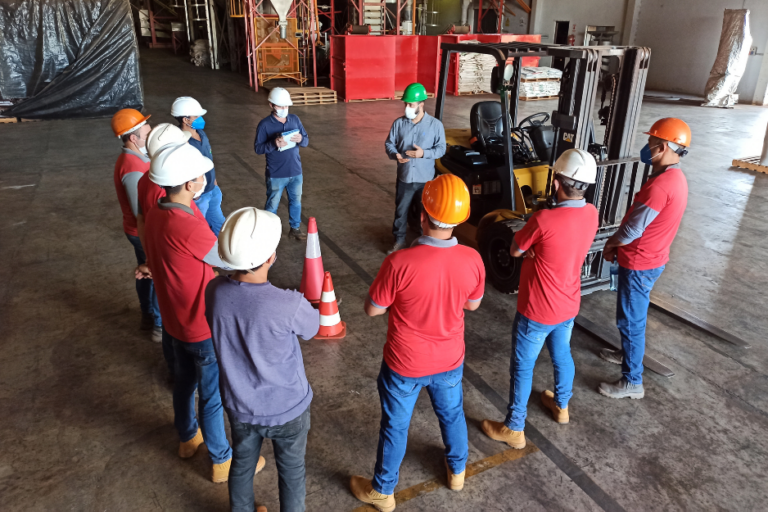
What does this look like on a hospital unit or a plant floor?
The 2026 report draws on organizations across industries, including healthcare and manufacturing, but it doesn’t separate frontline employees from office staff. So we can’t put a number on how this plays out for people who work shifts, on units, or on a line. What the report does show points to two places to look:
- Between departments. Communication between departments is the lowest-scoring key driver item in the report, at 53% favorable. Hospitals and plants run on handoffs between units, shifts, and departments, so that gap is worth checking where you work.
- At the supervisor level. The report cites Gallup research that managers account for up to 70% of the variance in team engagement, and notes that fewer than half of managers have received formal management training. On a unit or a line, the supervisor is often the person employees would ask.
The same applies to people who have already left. For a former employee on a unit or a line, the supervisor may have been the main link to the company, and an unexplained change leaves them with no obvious place to ask.
One question before you go
Think of the last person who left your organization on good terms. Do you know how they describe the company today?
See what drives engagement across industries
People Element’s 2026 Employee Engagement Report draws on more than 94,000 responses from 300+ organizations, including healthcare and manufacturing employers. It covers the three drivers behind this story, the 2025 rebound in engagement, and what high-engagement organizations do differently.
Sources
People Element. 2026 Employee Engagement Report. April 2026. Figures used: 63% sufficient communication from leadership; 65% leadership’s actions show they value employees; 53% communication between departments; managers up to 70% of variance in team engagement (Gallup research cited in the report); fewer than half of managers formally trained; four consecutive years of the three key drivers; 94,000+ responses from 300+ organizations. https://get.peopleelement.com/2026-employee-engagement-report
Parker, K., and Horowitz, J. M. “Majority of workers who quit a job in 2021 cite low pay, no opportunities for advancement, feeling disrespected.” Pew Research Center, March 9, 2022. Figures used: 63% low pay; 57% feeling disrespected. https://www.pewresearch.org/fact-tank/2022/03/09/majority-of-workers-who-quit-a-job-in-2021-cite-low-pay-no-opportunities-for-advancement-feeling-disrespected/
Sull, D., Sull, C., and Zweig, B. “Toxic Culture Is Driving the Great Resignation.” MIT Sloan Management Review, January 2022. Figures used: compensation ranked 16th; toxic culture 10.4 times more powerful than compensation; 34 million employee profiles. https://sloanreview.mit.edu/article/toxic-culture-is-driving-the-great-resignation/