How do you engage a multigenerational manufacturing workforce?
Manufacturers can better engage a multigenerational workforce by listening to employees at different career stages rather than assuming every generation wants the same—or fundamentally different—things. The goal is to understand what matters to a near-retirement technician, a mid-career supervisor, and a newly hired Gen Z operator, then identify where their needs overlap and where the employee experience should adapt.
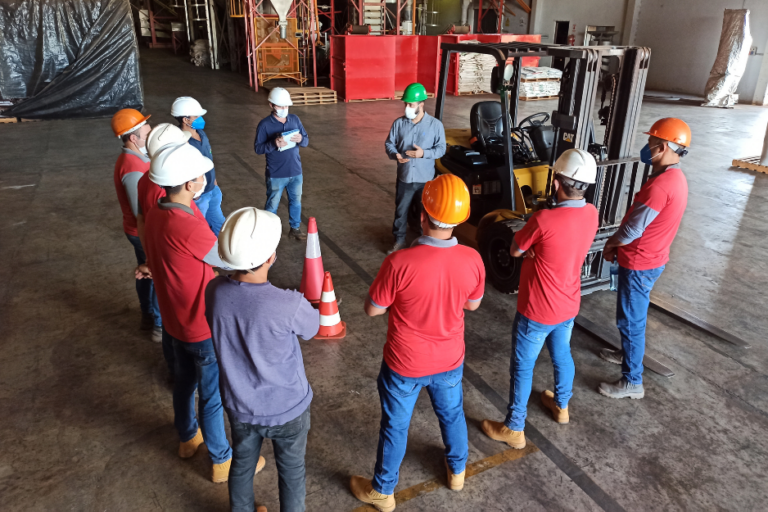
Walk onto almost any manufacturing floor and you may find employees whose careers began decades apart working side by side.
One technician may have 30 years of knowledge about the equipment and be thinking about retirement. Another employee may have joined the organization six months ago and be learning both the job and the industry. In between are employees balancing career growth, family responsibilities, leadership opportunities, changing technology, and evolving expectations about work.
That mix creates challenges, but it also creates an opportunity.
Manufacturers do not simply have an aging-workforce problem or a young-worker attraction problem. They have a multigenerational workforce to understand, engage, develop, and connect.
Employee listening can help them do it without relying on assumptions about what each generation supposedly wants.
Is manufacturing’s workforce older than average?
Yes. Current federal workforce data shows that manufacturing employees are somewhat older than the U.S. workforce overall.
According to the U.S. Bureau of Labor Statistics, the median age of workers in manufacturing was 43.9 in 2025, compared with 42.1 across all employed workers. Manufacturing included approximately 2.94 million employees ages 55–64 and another 878,000 employees age 65 or older.
This is not a new concern for the industry. Deloitte and The Manufacturing Institute noted in their 2024 manufacturing outlook that nearly one-third of the manufacturing workforce was over age 55 as of 2022 and highlighted the potential value of engaging experienced employees in knowledge-transfer and alumni strategies as they approach retirement.
At the same time, younger employees are entering an industry whose roles, technology, and workforce expectations are changing.
That means manufacturers need to solve two problems at once: retain and transfer the knowledge of experienced workers while creating an employee experience that engages the people coming behind them.
The aging manufacturing workforce creates more than a headcount problem
When experienced manufacturing employees retire, organizations do not simply lose labor capacity. They may lose knowledge that took decades to accumulate.
The Manufacturing Institute studied this issue directly in its research on the aging manufacturing workforce. Ninety-seven percent of surveyed manufacturing firms expressed at least some concern about losing institutional and technical knowledge, and almost half reported being very concerned about that “brain drain.”
That risk becomes more significant as replacement demand grows. Deloitte and The Manufacturing Institute estimate that U.S. manufacturing could need as many as 3.8 million workers between 2024 and 2033, with retirements accounting for a large share of the projected openings.
For manufacturers, the implication is straightforward: waiting until an experienced employee gives notice to think about knowledge transfer is too late.
Organizations need to understand who is approaching retirement, what knowledge is concentrated with those employees, what might encourage them to remain engaged longer, and how that experience can be transferred to employees earlier in their careers.
For more on the connection between retirements, the skills gap, and retention, see Why Retention Matters More With 3.8 Million Manufacturing Jobs to Fill.

Younger employees are entering a different manufacturing environment
The workforce entering manufacturing today is also stepping into a very different industry than employees who began their careers 20 or 30 years ago.
Automation, robotics, digital tools, connected equipment, analytics, and AI are changing both the work and the skills employees need. Deloitte and The Manufacturing Institute’s 2024 talent study found that manufacturers are responding by investing in training, mentoring, knowledge transfer, rotational programs, and other workforce-development strategies.
The same research notes that as more Millennials and Gen Z employees enter the workforce, manufacturers are evaluating changes such as flexible scheduling, accessible training, personalized career growth, and opportunities to work with emerging technology. In the manufacturer survey, 38% identified accessible training and upskilling opportunities as an impactful attraction and retention strategy, while 36% cited personalized career growth opportunities.
Those findings should not be interpreted as a checklist of what every younger employee wants.
A 24-year-old production employee and a 24-year-old engineer may have very different priorities. So might two employees of the same age on different shifts, in different plants, or at different stages of their personal lives.
That is exactly why employers should listen rather than stereotype.
Don’t manage generations. Understand employees at different career stages.
Generational labels can be useful for describing broad demographic shifts. They become less useful when employers start using them to predict individual behavior.
Not every Baby Boomer wants to slow down. Not every Gen Z employee wants constant feedback. Not every Millennial prioritizes flexibility above everything else.
Manufacturers can get much better information by asking employees directly.
A near-retirement technician may care about schedule flexibility, physical demands, knowledge transfer, recognition for expertise, or a phased transition. A new production employee may care more about onboarding, manager support, training, understanding how to advance, or whether their voice is taken seriously.
Some priorities may differ.
Others may be remarkably similar.
That distinction matters because the goal of a multigenerational engagement strategy should not be to create four different employee experiences based on birth year. It should be to understand where employee needs vary by career stage, tenure, role, shift, location, and life circumstances and where common engagement drivers cut across the workforce.

What do generations on the same manufacturing floor have in common?
People Element’s own engagement research provides a useful starting point.
Across more than 94,000 employee responses in People Element’s 2025 benchmark data, Communication & Employee Voice, Growth & Value, and Leadership Effectiveness emerged as the leading drivers of engagement. Those same themes have remained among People Element’s strongest engagement drivers since 2022.
Those are not generational concepts.
Employees at many career stages want to understand what is happening, believe their perspective matters, feel valued, have opportunities to develop, and trust the people leading them.
That does not mean every employee experiences those themes in the same way. Development for a recently hired employee may mean learning a new skill or seeing a clear career path. Development for a veteran employee may mean mentoring, becoming a technical expert, learning emerging technology, or preparing others to take on responsibilities they have held for years.
The driver can be the same even when the action looks different.
Multigenerational teams can turn workforce change into an advantage
Manufacturers do not have to view age diversity only as a succession problem.
The Manufacturing Institute studied multigenerational manufacturing teams specifically and found that more than 60% of surveyed companies were using multigenerational teams to enhance innovation and creativity and improve productivity.
The potential benefit is easy to see on a manufacturing floor.
An experienced employee may bring years of process knowledge, pattern recognition, customer context, and troubleshooting experience. A newer employee may bring recent technical training, familiarity with digital tools, or a fresh perspective on a process that has always been done a particular way.
The value comes from creating conditions where those perspectives actually interact.
That requires more than putting employees of different ages on the same team. Manufacturers need intentional opportunities for mentoring, reverse mentoring, cross-training, collaborative problem-solving, and knowledge sharing.
Knowledge transfer should work in both directions
When manufacturers talk about multigenerational teams, knowledge transfer is often framed as older employees teaching younger employees.
That is essential, but incomplete.
Experienced workers may hold deep knowledge about equipment, customers, quality issues, safety, processes, and the history behind operating decisions. Newer employees may bring different technical training, experience with digital tools, or comfort with emerging technologies.
The strongest knowledge-transfer model allows both groups to contribute.
A veteran technician can teach a newer employee how to identify an equipment issue that does not appear in a manual. A newer employee may help the team find a better way to document that knowledge digitally so it is available long after the original technician retires.
That is not simply succession planning.
It is organizational learning.

Ask different employee groups the same questions—and compare the answers
This is where employee surveys become especially useful for a multigenerational workforce.
Manufacturers do not necessarily need a separate “Gen Z survey” and “Baby Boomer survey.” In many cases, the more useful approach is to ask employees the same core questions and then analyze where experiences differ.
For example:
Do I feel valued for the work I do?
Do I receive the information I need to do my job effectively?
Do I have opportunities to learn and grow?
Does my manager provide useful feedback?
Do I believe my ideas and suggestions are considered?
Can I see a future for myself at this organization?
Do I have the tools and resources I need to succeed?
Then segment the results.
Employees approaching retirement may score development highly but report concerns about workload or flexibility. Newer employees may feel positive about the technology but unclear about advancement. One age group may not differ meaningfully from another at all—but employees with less than one year of tenure may have a very different experience from employees who have been there for 10 years.
That is useful information.
The objective is not to prove that generations are different. It is to discover where the employee experience is different and why.
Listen to near-retirement employees before their knowledge walks out the door
Manufacturers should pay particular attention to experienced employees approaching retirement.
The Manufacturing Institute’s aging-workforce study found that 97% of manufacturing firms were aware of the aging-workforce issue and 78% were concerned about it. Yet awareness alone does not protect institutional knowledge.
Stay interviews and targeted pulse surveys can help manufacturers understand:
- What would make experienced employees want to remain longer?
- Would different schedules or phased retirement options matter?
- What parts of their role are becoming harder to sustain?
- What knowledge do they believe needs to be transferred?
- Who could they mentor?
- What skills do they still want to develop?
- How would they like their expertise to be used?
Those conversations can reveal options an organization may never uncover through workforce planning data alone.
Listen to newly hired employees before early frustration becomes turnover
The other end of the workforce deserves equally deliberate attention.
New manufacturing employees are learning more than a job. They are learning how the organization communicates, whether managers follow through, how employees are treated, how much support is available, and whether the career opportunity they were promised during recruiting exists in practice.
Onboarding surveys can identify where that transition is breaking down.
Rather than waiting until an annual engagement survey, manufacturers can check in during an employee’s first weeks and months to understand whether expectations are being met, training is effective, managers are supportive, and employees know how they can develop.
For younger employees entering manufacturing for the first time, those early experiences may shape not only whether they stay with the company but whether they see a future in the industry at all.
Managers connect the generations on the floor
A multigenerational workforce eventually becomes a management challenge because supervisors are where many workforce policies become real.
Managers decide how information is communicated, who gets development opportunities, how knowledge is shared, whether employees receive recognition, how conflict is handled, and whether different perspectives are treated as valuable.
That makes manager effectiveness particularly important on teams with employees at very different career stages.
A strong supervisor does not assume an employee’s age tells them how to manage that person. They ask questions, understand individual goals, create opportunities for employees to learn from one another, and adapt when the team’s needs differ.
People Element’s engagement data consistently identifies Leadership Effectiveness as a leading driver of engagement, reinforcing the importance of developing managers who can lead employees with different experiences and expectations.
For more on the manager-retention connection, see Retention Isn’t About Pay, It’s About Managers.

How can manufacturers engage employees across generations?
Manufacturers can engage a multigenerational workforce by focusing on shared engagement drivers while listening for differences by career stage, tenure, role, and age. The strongest strategies combine employee voice, development, knowledge transfer, manager effectiveness, and targeted action rather than relying on generational stereotypes.
Five practices can help.
1. Segment employee feedback without stereotyping employees
Compare survey results by age or generation when useful, but also analyze tenure, role, shift, department, location, and career stage. Age may explain a difference—or another factor may matter more.
2. Create two-way knowledge transfer
Pair experienced employees and newer workers in ways that allow technical knowledge, institutional context, digital skills, and new ideas to flow in both directions.
3. Make development relevant at every career stage
A new hire may want a career path. A mid-career employee may want cross-training or leadership development. A veteran employee may want to mentor or deepen technical expertise. Development should not stop because someone is late in their career.
4. Equip managers to lead individuals, not stereotypes
Teach supervisors to have meaningful career and feedback conversations, understand individual motivations, and build teams where different experiences are treated as an advantage.
5. Listen throughout the employee lifecycle
Use onboarding surveys, engagement surveys, pulse surveys, stay interviews, manager feedback, and exit surveys to understand how the employee experience changes from entry through retirement.
The goal is not to keep generations separate. It is to help them learn from one another.
The aging manufacturing workforce presents a real challenge. Millions of experienced workers are moving closer to retirement while manufacturers need to attract and develop the employees who will take the industry forward.
But that transition is happening on the same plant floor.
Manufacturers have an opportunity to preserve decades of experience while bringing new skills, perspectives, and technology into the workforce. Doing that well requires more than a succession plan or a recruiting campaign. It requires understanding what employees at different stages of their careers are actually experiencing.
The organizations that listen carefully can identify what their employees share, where their needs differ, and how to create an environment where knowledge moves instead of disappearing.
That is what makes a multigenerational workforce an advantage rather than simply a demographic challenge.

Hear every generation on the manufacturing floor
People Element helps manufacturers listen across the employee lifecycle and understand how experiences differ by workforce segment, location, department, tenure, role, and other meaningful groups.
By combining engagement, onboarding, stay, manager, and exit feedback, manufacturers can better understand what experienced employees need to stay engaged, what newer employees need to build a career, and where the organization can strengthen the connection between the two.
Frequently Asked Questions
Is manufacturing facing an aging workforce?
Yes. Bureau of Labor Statistics data shows that the median age of U.S. manufacturing workers was 43.9 in 2025, compared with 42.1 for the overall employed population. Manufacturing also employs millions of workers age 55 and older.
Why is an aging manufacturing workforce a challenge?
An aging workforce increases retirement-related replacement demand and creates a risk of losing institutional and technical knowledge. In Manufacturing Institute research, 97% of surveyed manufacturing firms expressed concern about brain drain as experienced workers retire.
How do you engage multigenerational manufacturing employees?
Focus on shared engagement needs such as communication, feeling valued, development, employee voice, and effective leadership, while using employee feedback to understand where needs differ by age, tenure, role, or career stage.
Should manufacturers survey different generations separately?
Usually, it is more useful to ask core questions consistently and segment the results afterward. That allows manufacturers to compare experiences while determining whether age, tenure, role, shift, or another factor is actually driving the difference.
How can manufacturers transfer knowledge from older to younger employees?
Mentoring, cross-training, job shadowing, documented processes, phased retirement, and multigenerational project teams can help transfer knowledge. The strongest approach also allows knowledge to flow in both directions, including newer employees sharing emerging technical and digital skills.
What are the benefits of a multigenerational manufacturing workforce?
Multigenerational teams can combine institutional knowledge with new skills and perspectives. In Manufacturing Institute research, more than 60% of surveyed manufacturers used multigenerational teams to support innovation, creativity, and productivity.