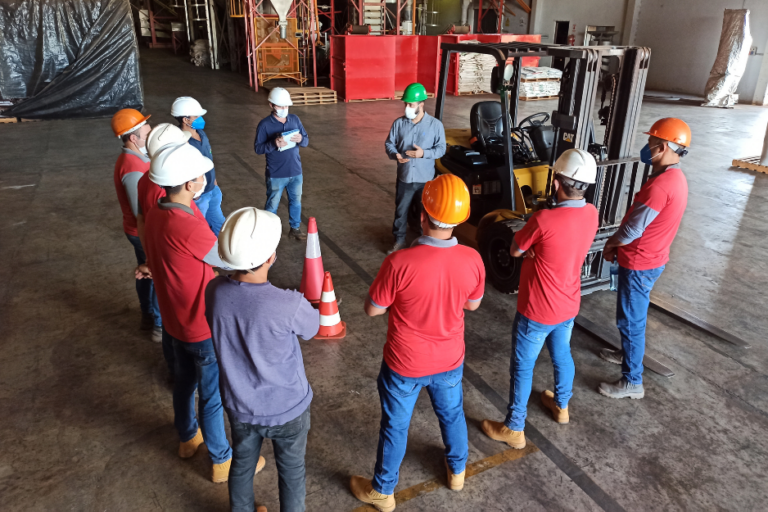
Why are manufacturing employees quitting?
Quick answer: Manufacturing employees leave for many reasons, including pay. But compensation does not tell the whole story. Research shows that the everyday employee experience—including communication, feeling valued, growth opportunities, and leadership effectiveness—also plays an important role in whether employees stay engaged and see a future with their employer.
When a skilled machinist, maintenance technician, welder, or production employee quits, compensation is often the first explanation. A competitor offered another dollar an hour. The benefits were better. There was a signing bonus down the road.
Sometimes, that is exactly what happened. But manufacturers that treat every resignation as a compensation problem risk overlooking something much closer to the plant floor: what it is like to work for that employee’s manager every day. Pay matters, but so do the conditions employees experience between paychecks.
People Element’s own employee data suggests those conditions deserve serious attention. Across People Element’s 2025 benchmark data, three themes emerged as the leading drivers of employee engagement:
- Communication & Employee Voice
- Growth, Value & Experience
- Leadership Effectiveness
These were not one-year anomalies. The same three themes have consistently appeared among People Element’s strongest engagement drivers since 2022.
For manufacturers trying to improve manufacturing employee retention, that is an important distinction. Competitive pay may help an employee choose your organization, but their everyday experience can influence whether they continue choosing it.

Does pay affect manufacturing turnover?
Yes. Pay affects manufacturing turnover. Manufacturers compete for skilled workers in tight local labor markets, and compensation needs to be competitive.
But compensation alone cannot explain every exit. The more useful question is whether pay is actually the primary reason your employees are leaving.
A compensation benchmark cannot answer that on its own. Your employee data can help reveal whether turnover is concentrated on a particular shift, within one department, among employees at a certain tenure point, or under a particular supervisor. If a manufacturer repeatedly raises wages but voluntary turnover remains concentrated in the same part of the organization, the company may be treating the symptom rather than the cause.
The frontline supervisor is where “the company” becomes real
Corporate culture can feel abstract from the production floor. Employees do not experience a mission statement in the same way they experience the person assigning their work.
Their supervisor influences whether expectations are clear, whether schedule or process changes are explained, whether good work is recognized, and whether employee concerns get a meaningful response. Managers also shape whether coaching happens before problems escalate, whether employees are treated consistently, and whether development conversations actually take place.
Those interactions become evidence of what the organization values.
People Element’s 2025 benchmark data reinforces the importance of those everyday experiences. 70% of employees said their ideas and suggestions are given consideration, while 68% said they are kept informed about matters that affect them.
Both measures fall within Communication & Employee Voice, one of People Element’s strongest predictors of engagement. Communication, then, is not simply an HR communication issue. It is part of the employee experience, and frontline managers are often the people responsible for translating organizational communication into something employees can understand and act on.
More communication does not always mean better communication
Manufacturers already communicate constantly through pre-shift meetings, safety talks, production boards, scheduling updates, quality notices, text messages, emails, and supervisor conversations. But communication volume and communication effectiveness are not the same thing.
People Element’s 2025 data found that only 63% of employees responded favorably that there is sufficient communication from leadership, and that measure has remained relatively flat for several years.
The 2026 People Element Employee Engagement Report points to an important possibility: organizations may be increasing how often they communicate without meaningfully improving how employees experience that communication.
For a plant manager or frontline supervisor, the distinction matters. Employees need information that is clear, relevant to their work, consistent, timely, credible, and two-way. A manager can hold every required shift meeting and still leave employees feeling uninformed if the communication does not answer the questions employees actually have.

Why do skilled trades workers quit even when pay is competitive?
Skilled trades employees may leave a competitive-paying job because compensation is only one part of their work experience. Communication, respect, development, recognition, workload, growth opportunities, and trust in management can all affect whether an employee sees a future with the organization.
This is particularly important in roles where experience is difficult to replace. A maintenance technician may know exactly how a critical piece of equipment behaves under unusual conditions. A machinist may have years of institutional knowledge about a specific line. A skilled operator may know how to spot a quality problem before it becomes visible in a dashboard.
When those employees leave, manufacturers lose more than headcount. Recruiting, onboarding, overtime, lost productivity, and the loss of institutional knowledge can all contribute to the true cost of manufacturing turnover.
The competing offer an employee accepts may not tell you what originally made them receptive to leaving. Perhaps they stopped feeling valued, a new supervisor changed how the team operated, they saw no opportunity to grow, communication deteriorated, or they had been raising the same concern for months without seeing action.
The offer may have enabled the exit. It may not have created the desire to leave.
Feeling valued and seeing a future matter, too
Manager effectiveness is not only about communication. Managers also influence whether employees feel supported, recognized, and able to develop.
People Element’s 2025 benchmark data found:
- 71% of employees said they have someone at work who encourages their development.
- 70% said they feel valued as an employee.
- 66% said they are provided opportunities to grow professionally.
- Only 56% said they feel they have the opportunity to be promoted.
Growth, Value & Experience was one of People Element’s three leading engagement-driver themes.
For manufacturers, that has an important implication: career growth does not always have to mean moving someone into management. A skilled trades employee may want to build a new technical capability, earn a certification, cross-train on another process, mentor newer employees, or become the recognized expert in a specific area.
Managers are often the people who make those opportunities visible—or fail to.
Your turnover rate cannot tell you whether you have a pay problem or a manager problem
A plant-wide turnover rate can tell you that people are leaving, but it cannot tell you why.
Consider two facilities with the same voluntary turnover rate. At the first plant, resignations are distributed across teams, and departing employees consistently identify compensation as a major factor. At the second, exits are heavily concentrated on a particular shift, and employee comments repeatedly mention communication, inconsistent treatment, and lack of supervisor support.
Those plants do not have the same retention problem, so they should not have the same retention strategy.
Manufacturers should look at feedback and turnover through multiple lenses, including location, department, shift, role, tenure, and manager. Doing that well requires manufacturers to collect feedback from frontline and deskless employees in ways that work across shifts, roles, and locations.
That is where broad turnover data starts becoming actionable. People Element’s research on high-engagement organizations reinforces this point: organizations with stronger engagement do not act only on company-wide averages. They act on data at the manager and department level.

Measure manager effectiveness before turnover measures it for you
Exit surveys are valuable because they help organizations understand why people left. The limitation is timing: by the time an employee completes an exit survey, the retention decision has already been made.
A stronger listening strategy looks for those signals earlier. Engagement surveys can identify teams where communication or trust is declining. Stay interviews can uncover why experienced employees continue to stay and what might cause them to reconsider. Onboarding feedback can show whether new hires are receiving the support they need from supervisors.
360-degree feedback adds another layer by helping managers understand how their leadership is experienced by the people around them. These approaches can also help HR teams improve manager effectiveness before manager-related issues begin appearing repeatedly in exit feedback.
Used together, those listening points help manufacturers move from a broad problem—“Our turnover is too high”—to something much more actionable, such as “Employees on this team need clearer communication and more consistent coaching from their supervisor.”
How can 360-degree feedback help manufacturing managers?
360-degree feedback gathers perspectives from several groups around a leader—often including direct reports, peers, the manager’s leader, and the manager themselves—to identify strengths, blind spots, and specific leadership behaviors that need development.
For organizations that are newer to this approach, understanding how 360-degree feedback works can help establish the right expectations before launching an assessment.
For manufacturing supervisors, a 360 assessment might examine behaviors such as:
- Communicating expectations clearly
- Listening to employee concerns
- Providing useful feedback
- Recognizing strong performance
- Treating employees fairly and consistently
- Following through on commitments
- Supporting employee development
- Building trust
- Coaching employees through problems
This adds context that traditional performance measures may miss. A supervisor may consistently hit production targets, and their manager may view them as highly effective, while direct reports experience poor communication, low recognition, or inconsistent treatment.
Both perspectives matter. A 360-degree assessment helps reveal the gap.
360-degree feedback should develop managers, not rank them
The objective is not to create a list of the “best” and “worst” supervisors in a plant. It is to identify specific behaviors managers can improve.
One supervisor may need to communicate production changes more clearly. Another may need to provide more recognition. A third may need to listen before making decisions that affect a team’s work. And a newly promoted technical expert may know the equipment inside and out but have never been taught how to coach employees.
Those are different development needs, and a single manager-effectiveness score cannot tell you what action to take. Good multi-rater feedback can.

Connect manager feedback to the rest of the employee lifecycle
360-degree feedback becomes more useful when it is connected to other employee listening data.
Imagine seeing the following pattern:
360-degree feedback: Direct reports say a supervisor does not communicate clearly.
Engagement survey: The same team scores below the plant average for communication and feeling informed.
Stay interviews: Experienced employees say recent changes are not being explained well.
Exit surveys: Employees leaving that shift repeatedly mention communication or their supervisor.
Now the organization does not simply have a turnover statistic. It has a pattern, and patterns make action possible.
Develop managers as leaders and coaches—not just task supervisors
One of the clearest findings in People Element’s 2026 Employee Engagement Report is what highly engaged organizations do differently. They do not simply collect more data; they act on it closer to where employees work.
They:
- Measure engagement consistently
- Share results
- Act at the manager and department level
- Tell employees what was heard and what changed
- Develop managers as leaders and coaches, not just task supervisors
That last point is especially relevant in manufacturing. Many frontline supervisors earned their role because they were excellent operators, technicians, or technical experts. That does not automatically mean they have been taught how to communicate through change, coach employees, deliver feedback, build trust, or develop people.
Those skills can be measured, coached, and developed.
Pay gets you into the retention conversation. The employee experience determines what happens next.
Manufacturers need competitive compensation. That is not in question. But compensation should not become the default explanation for every resignation.
People Element’s own employee benchmark data has repeatedly found that Communication & Employee Voice, Growth & Value, and Leadership Effectiveness are among the strongest drivers of engagement. Those are not primarily compensation issues. They are everyday employee-experience issues, and managers have an outsized opportunity to influence them.
Before assuming that another employee left because a competitor paid more, ask:
- Are exits concentrated under particular supervisors?
- Do certain shifts score lower on communication or trust?
- Do employees believe their ideas are heard?
- Do employees feel valued?
- Can skilled employees see opportunities to grow?
- Are supervisors coaching or simply assigning work?
- Does current employee feedback match what departing employees are saying?
Those answers can tell you far more than the turnover rate alone.
Sometimes a better-paying offer is the reason printed on the resignation letter. The real retention problem started long before the offer arrived.
Help managers see what their teams experience
People Element helps manufacturers connect feedback across the employee lifecycle so organizations can understand where employee experience and retention risks are concentrated.
For organizations that want deeper insight into individual leadership effectiveness, People Element’s Manager 360 uses multi-rater feedback to help managers understand how their leadership behaviors are experienced by others and identify focused opportunities for development.
Combined with engagement, onboarding, stay, and exit feedback, those insights can help manufacturers move from reacting to turnover to addressing the conditions that contribute to it.
Explore Manager 360 →
Frequently Asked Questions
Why are manufacturing employees quitting?
Manufacturing employees leave for multiple reasons, including compensation, manager relationships, communication, development opportunities, workload, schedules, culture, and career growth. Manufacturers should analyze their own employee feedback and turnover data rather than assuming pay is the primary reason for every resignation.
Does pay affect manufacturing turnover?
Yes. Competitive pay is an important attraction and retention factor in manufacturing. But compensation alone does not explain every exit. Communication, growth opportunities, feeling valued, leadership effectiveness, and the day-to-day manager experience can also influence whether employees stay.
Why do skilled trades workers quit if the pay is good?
Skilled trades workers may leave competitive-paying jobs because of poor communication, lack of recognition, weak manager relationships, limited development opportunities, workload, scheduling, or lack of trust. A higher-paying offer may enable an employee to leave without being the original reason they wanted to.
How do managers affect employee retention in manufacturing?
Managers influence employees’ everyday experience through communication, feedback, recognition, coaching, development, fairness, and trust. Poor experiences in those areas can increase retention risk even when compensation is competitive.
What is a 360 assessment?
A 360 assessment is a multi-rater feedback process that gathers perspectives about a manager from several groups, often including direct reports, peers, leaders, and the manager themselves. It helps identify leadership strengths, blind spots, and specific behaviors that can be developed.
How can manufacturers tell whether turnover is caused by pay or managers?
Manufacturers should compare exit survey data with engagement results, stay interviews, onboarding feedback, manager-effectiveness data, and voluntary turnover by location, department, shift, role, and manager. Repeated patterns can help determine whether compensation, management experience, or another issue is contributing most strongly to turnover.
What should manufacturers measure to improve manager effectiveness?
Useful measures include communication, employee voice, trust, recognition, coaching, development, fairness, follow-through, clarity of expectations, and employees’ overall experience working with their direct supervisor.